


A decade ago, Lytham Hall was struggling. The Georgian house – once home to the powerful Clifton family – was in decline. Parts of the building were deteriorating, the café was barely functioning, and a major Heritage Lottery bid which would have funded large-scale restoration had fallen through, taking key staff roles and any real sense of direction with it. Locally, it had become somewhere few people visited. Many didn’t even know what lay at the end of the long drive.
Among those who kept coming back were Paul Lomax and Peter Anthony. The pair – Paul originally fron Wigan, Peter from Oldham – had met more than 30 years earlier in the entertainment world and made their home in Lytham. Peter was a singer and businessman, performing professionally from his teens, while Paul trained as an actor. They built a life together, running hospitality businesses and dealing in antiques.
‘We always had a soft spot for it,’ says Peter. The two of them would visit on their days off, walking the grounds and stopping off at the café. ‘We used to argue about who was going in to place the order,’ he says, laughing. ‘It was awful. There was no menu as such. You didn’t know what you’d get, it depended what volunteer turned up on the day.’

With their backgrounds in entertainment and business, they found themselves doing what they could to help fund the Hall. ‘We put on events and got friends to perform for free,’ says Paul. It was that involvement that led to something more. A conversation with volunteers prompted the suggestion that they step in and try to turn things around. They agreed to give it 12 months. They were only meant to stay for a year. But the longer they stayed, the harder it became to leave. ‘This place gets in your system,’ says Peter.
Ten years later, they are still here and Lytham Hall is almost unrecognisable from the place they first took on. It wasn’t just an estate in need of repair, it had lost direction. ‘There was no plan,’ Peter says. ‘And no confidence.’ Funders were wary, local authorities cautious, and the wider feeling was that the Hall might not recover.
‘We had to rebuild confidence by showing people something was happening,’ says Peter. ‘One of the first things I insisted on doing was putting four six-foot signs at the gatehouses with pictures of Lytham Hall on them, because nobody knew what was up the drive.’
Next, they focused on the café, turning it into somewhere people wanted to sit, eat and return to. ‘Within weeks, we were taking £400 to £500 a day,’ says Peter. ‘Much better than the £30–£40 it had been turning over before.’ Ten years on, it brings in around £1.4m a year. They continued raising funds however they could. ‘We were doing raffles for everything and buying bits of equipment one at a time,’ says Paul.

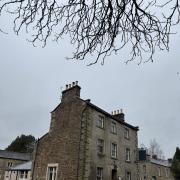
The next big change was one locals will likely remember – the colour of the Hall. For years its exterior had been painted white, but research showed that wasn’t right. The original colour – uncovered through paint analysis – was a warm ochre, closer to how it would have looked when Thomas Clifton commissioned John Carr of York to design the house in 1752.
Not everyone was convinced by the change at first. ‘People said it looked like a 1970s chip shop,’ says Paul. But once they got used to it, they could see how much better it worked. The Hall sat far more comfortably in its surroundings, and more importantly, it changed how people saw the place.
‘It made it marketable,’ says Paul. ‘People could imagine being here, having weddings, events, everything.’ It also helped them land one of their first major moments. They approached Antiques Roadshow to see if they would consider filming there. ‘They’d never heard of us,’ Paul says. ‘We weren’t even on their blacklist.’ But they agreed to come and have a look. What they saw wasn’t just the building, but what was starting to happen around it – events, volunteers, ambition – and a site capable of handling large numbers of visitors.
They got the green light, and in June 2019 Fiona Bruce and the Antiques Roadshow team rolled into Lytham Hall. Filming brought thousands of people to the site over two days. ‘That wouldn’t have happened before,’ Peter says. ‘They’d have turned round at the gates.’ From there, things began to grow, and quickly. Visitor numbers rose from around 20,000 a year to more than 260,000. Outdoor theatre became a regular summer fixture, joined by car shows, concerts and events that steadily brought people back. The grounds – which stretch across around 80 acres – started to feel alive again.

There have been ‘pinch-me’ moments along the way. ‘We had Jools Holland here and Tom Jones in 2021, it was just unbelievable,’ says Paul. ‘There were 10,000 people on the front lawn. I went upstairs, opened the window and looked out. I could just see this sea of people and Tom Jones on stage. I thought, is this actually happening? Am I really watching this at our Hall?’
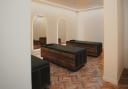
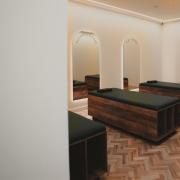
Inside the Hall, though, was a different picture, the result of years of gradual decline. ‘It was a complete, utter dilapidated mess with mould everywhere, cracks in ceilings, plaster falling down,’ says Paul.
The roots of that decline go back to the final chapter of the Clifton family’s ownership. The Cliftons had owned the estate for more than 300 years, building a Jacobean manor in 1606 under Sir Cuthbert Clifton – parts of which still survive within the structure today – before the current house was commissioned in the 18th century.
Their name still runs through Lytham, in its streets, its buildings and its history. But the final chapter of their story was less grand. The last squire, Henry Talbot de Vere Clifton – known as Harry – inherited the estate in 1928 and gradually lost all the family’s fortune. ‘He was a gambler,’ says Peter. ‘He lost £150,000 on just one bet. That’s millions now.’
By the 1960s, the estate had to be handed over. It was sold to Guardian Assurance Company, which used it as its headquarters until 1997, when it was acquired by Lytham Town, who passed it over to Heritage Trust North West.

Peter and Paul’s work to restore it to its former glory has been gradual. ‘We’ve had to take it a room at a time,’ says Paul. ‘Over the years it had deteriorated so badly. You have to prioritise. We’ve always got a list. What’s in the worst state, what’s at risk, what needs doing first.’
There is always something being worked on, and often visitors get to see that work in progress as they move through the Hall. With each stage, Peter and Paul have made sure the building earns its keep. Every space has a purpose; nothing is left sitting idle. The library, for instance, is now home to Lilibet’s Afternoon Tea Emporium, where visitors sit surrounded by original features, taking afternoon tea. The old kitchen has been turned into a shop, while the gatehouses and gardener’s cottage have been converted into holiday lets.
There are newer additions too. Outside, Leafy Lytham Garden Hub run by Greg Anderton draws in visitors for plants as much as the grounds themselves, and the Animal Hub, where rabbits Charles and Camilla live alongside resident goats Bogie and Toby, is popular with younger visitors.
The events programme now stretches all-year round. In addition to a packed summer schedule, each Christmas the Hall is transformed with a new theme each year, running for six weeks. Last year’s ‘The Most Wonderful Rhyme of the Year’ brought the building to life through nursery rhyme-inspired displays and the front of the building was lit up with projections from the team behind Blackpool illuminations.
Spending time with Peter and Paul, you start to see how they think. They don’t really see an empty space or a problem, they see opportunities and solutions. Take the dovecote, for instance, a listed structure that can’t easily be altered, with no obvious modern purpose. To them, that wasn’t a limitation so much as a starting point. ‘We thought we’ve got 800 niches… what can we do with them?’ Peter says. The answer was to turn it into a pet memorial sanctuary, a stroke of genius when you see how many people come to walk their dogs within the grounds.

Of course, Peter and Paul don’t do it all alone, behind them is an army of around 300 volunteers. ‘They are unbelievable,’ Peter says. ‘You cannot underestimate what they do.’ Their team efforts haven’t gone unnoticed. In 2022, Lytham Hall won a Historic Houses Restoration Award. Paul still remembers the call. ‘Peter said, “You need to be sat down”.’ When he was told they had won, he couldn’t speak. ‘I had such a lump in my throat and nothing would come out.’
At the ceremony, they found themselves among owners of some of the country’s best-known historic houses, estates passed down through generations. ‘They thought we owned Lytham Hall,’ Paul laughs. ‘However, that is far from the reality!’ It’s easy to see why people might think they do. The way they talk about the Hall, the affection they have for it, and the drive to make it success all feels very personal. Plus, they are rarely away from it. ‘We work 80 hours a week… we’re not here for the money,’ Peter quips.
Their next major project will be transforming the stable yard into a courtyard of artisan businesses, alongside a visitor centre, second café, and space for a small museum where a classic car – the same model once used by Violet Clifton, the last resident of Lytham Hall – will be on display.
‘We did some digging and found out what car she was chauffeured in,’ Peter says. ‘It was a Jaguar Mark V.’ They tracked one down and raised the money to buy it through crowdfunding. It is now being restored by local enthusiasts. ‘I said it didn’t need to run,’ Peter laughs. ‘But they said, “oh no, it will run”.’
It’s just another example of their dedication to bring local history back to life. ‘The more successful each part is,’ Peter says, ‘the more we can do next.’
A decade on, Lytham Hall is no longer a place people pass by. It is working, evolving, and firmly part of the life of the town again thanks to the energy, persistence and imagination of two locals who refused to give up on it..