


Mock-Tudor architecture built on leafy residential streets surrounding the Bridgewater Canal make Worsley a favourite for families, commuters and those seeking a slower pace of life just outside the city
Worsley is one of our region’s most distinctive suburban villages, shaped by centuries of industrial innovation and later reinvention as a desirable residential enclave. Its most famous legacy is the Bridgewater Canal system, developed in the 18th century and widely regarded as one of the earliest modern canals in Britain. The canal network and its associated structures remain central to the village’s identity today, with waterside routes, bridges and historic buildings still defining the landscape.

The area developed around the estates of the Dukes of Bridgewater and later evolved into a mixture of mining, canal transport and planned estate development. While the industrial activity has long disappeared, its imprint remains visible in the layout of the village and surrounding settlements. And whether it is good planning or good fortune, it is beyond doubt that the Bridgewater Canal remains the village’s focal point. While some towns and cities built upon canals have moved away from the constructed waterways, Worsley remains faithful to it. The leafy green space between the canal and Barton Road, coupled with the expansive green on the east side, gives this lovely spot an oasis feel in an otherwise urban sprawl which stretches from Manchester city centre to the nearby M60 ring road and beyond.
While parts of Worsley are outside the M60, including Worsley Old Hall, Parr Fold Park and Worsley College, it is the area around the canal at Barton Road which gives the village its distinctive identity. Worsley Court House, which welcomes visitors from the busy M60, is a popular wedding venue. Its mock-Tudor style typifies much of the architecture in the village. Worsley Delph, the former quarry which supplied stone for Barton Bridge when it was built in 1676, is now a landmark site – and the start of the 52 miles of underground canal system which ferried coal in the 19th century.

Modern Worsley is primarily residential, characterised by leafy streets, period properties and more contemporary housing developments extending towards nearby areas such as Walkden and Eccles. The village retains a strong sense of separation from the wider urban sprawl, despite being within easy reach of central Manchester.
Green space is a defining feature, with nearby woods, parks and canalside walks offering immediate access to nature. The contrast between the historic waterways and modern commuter life gives Worsley a dual identity: part heritage village, part suburban base.
Connectivity is one of its strongest assets, with direct road links into Manchester and the wider motorway network, making it a popular choice for professionals seeking access to the city without urban density. Shaped by the 18th century canal and the cotton and iron industrial revolution it brought with it, Worsley is now one of the region’s most desirable places to live.
Read more
-
A rural Lancashire village with canalside walks and easy commuter links
-
If you move to this Lancashire village you’ll never want to leave.

WHAT TO BUY
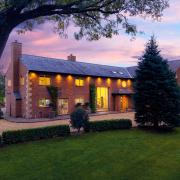
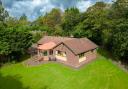
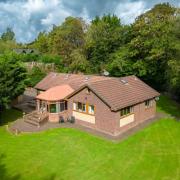
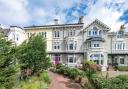
Worsley’s housing market is dominated by a mix of traditional period properties, substantial detached homes, with some modern developments in Boothstown and Roe Green.
Older parts of the village retain its trademark historic feel, with character homes and tree-lined streets reflecting its origins as the largest manor in the seven Bridgewater estates.
Its modern-day popularity is obvious for commuters: close to Manchester but with that rural village feel. Even though the M60 motorway skirts around the village, Worsley feels a world away from that fast-paced life. More recent expansion has introduced larger family housing aimed at commuters working in Manchester and surrounding employment centres.
The area is consistently regarded as a premium suburban location within the wider Salford region, supported by a strong demand from professionals and families seeking access to schools, transport links and green space.
Detached family homes dominate the upper end of the market, while semi-detached properties and terraces provide entry points for younger buyers. Demand means prices can be much higher than nearby areas like Walkden and Eccles. The housing market is geared towards long-term desirability rather than rapid turnover. The majority of properties sold in Worsley during the last year were semi-detached properties, selling for an average price of £290,303. Terraced properties sold for an average of £235,047, with detached properties fetching £457,204.

WHAT THE LOCALS SAY
Originally from Swansea, Helen Buckingham, 42, moved to Manchester city centre a decade ago, then made the switch with her partner Gary and their cockapoo dog to Worsley four years ago, where she now runs her own online travel business.
Sitting on the banks of the canal with a coffee from canalside The Flowerstop van, she says: ‘We’re very settled now. You can see by looking around, it is such a lovely village. There are lots of little independent businesses like The Flowerstop which are fabulous, and the community is great.
‘I lived in the city centre for six years and that is a very different experience to moving somewhere like this. Worsley has everything. There are millions of gorgeous dog walks along the canal and in the woods. We rarely go into the city centre now, because there is so much here, like a nice little high street full of bars, cafés and restaurants. All of them are dog friendly too.
‘I don’t drive much anymore because everything is here. I do Pilates, yoga, all that sort of stuff, all in the village; it is very convenient. I can’t see us ever leaving this area.’.














Share