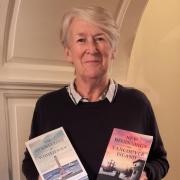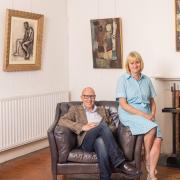


‘Ian lives on the fringe of the Lake District, near Ullswater, and is Music Director of Keswick Choral Society and St Oswald’s Church in Grasmere, as well as regularly playing for other choirs in the north of England’
‘A King’s Organ Scholar is expected not only to study, but also perform at a professional level for services, concerts, broadcasts and TV, as well as choir tours all over the world’
Christmas concerts and carol services make December the busiest time of year for organists and choir director, and Ian Hare is no exception. He’s accustomed to it now though, having been accompanying and conducting choirs since he was Organ Scholar at King’s College, Cambridge, playing for those wonderful annual Festivals of Nine Lessons and Carols broadcast on TV and radio.

Today, Ian lives on the fringe of the Lake District, near Ullswater, and is Music Director of Keswick Choral Society and St Oswald’s Church in Grasmere, as well as regularly playing for other choirs in the north of England and Scotland and giving organ recitals all over the country. A native of Hull, he began his musical training at Hymers College and St Mary’s Church in Beverley, and became a Fellow of the Royal College of Organists at age sixteen – one of the youngest ever to attain that professional qualification.
Following studies in Paris with André Marchal, Ian became Organ Scholar of King’s College under the direction of Sir David Willcocks and, for four years, accompanied the choir for services, broadcasts, recordings and concerts in the UK and abroad, and studied composition with Alan Ridout and Robin Orr, and later with Nadia Boulanger in France. He went on to the Royal College of Music, and in 1974 became a Lecturer in Music at Lancaster University, and later, its first University Organist. In 2006, he was awarded an Honorary Fellowship of the university, by which time he was also examining for the Associated Board of the Royal Schools of Music (ABRSM) across the UK and in the Far East, and busy performing, directing choirs, composing and teaching.
Ian’s organ recitals abroad and at major UK venues include major venues like Westminster Abbey, St Paul’s Cathedral and the Royal Albert Hall, and as well as recordings with King’s College, he has recorded organ CDs including In Pastures Green (2002), Spirit of the North (2006) and Organs of the Lake District (2016), and he is also a published composer of choral and organ works. In Cumbria, he’s held posts as Assistant Organist of Carlisle Cathedral, Director of Music at Cartmel Priory and Crosthwaite Church, Keswick, Chorus Master of Cumbria Rural Choirs (now Cumbria Singers), and Musical Director of Wigton Choral Society, receiving the well-deserved accolade of Musician of the Year at Cumbria Life’s Culture Awards in 2017.

A musician’s life is not just performing, recording and composition though so, to find out more, I met up with Ian at his well-equipped home music studio, complete with grand piano, electronic organ, shelves of music scores. My rather naïve first question is: does an experienced professional musician like him still need to do daily practice?
‘Oh yes, of course. I play at least an hour every day, either on organ or piano, depending on what’s coming up. And there’s also a lot of admin associated with running choirs and setting up engagements, plus my regular teaching. I’ve a number of private pupils who come to me here or at Grasmere.’
Pipe organs, of course, are unlike other musical instruments in not being portable as they’re permanent fixtures in churches or halls. This isn’t a problem for practising though, as Ian has his own electronic organ here.

‘It’s a two-manual model, ideal for note-learning and practice. Then, once a week, I go to Crosthwaite Church to play for two hours on what is the second largest organ in the county after Carlisle Cathedral, so perfect for rehearsing for recitals and concerts – I’m often asked to accompany other choirs at their concerts, playing recently for the Newton Stewart Singers at Wigtown, and soon for the Furness Bach Choir at Cartmel.’
Music education is a strong thread running throughout Ian’s work, whether as lecturer, examiner or teaching individuals, and it’s something he feels strongly about.
‘It’s so important to keep the art of music alive, especially in a society that often feels like it’s pointing in the opposite direction. Music is facing decline in state schools, something I became very aware of as an examiner, one day in an independent school with fantastic facilities like a concert hall and practice rooms, then the following day at a state school lucky to own one piano. The inequality really struck me.’
Although his life in music has encompassed so much, it was Ian’s four years at King’s College which shaped his musical vocation.

‘Passing my 11+ to Hymers College was a real turning point, meeting such intelligent, dedicated teachers, especially Graham Watson, who encouraged me to study organ, take my FRCO when I was just sixteen and apply for the King’s College, Cambridge organ scholarship.’
A King’s Organ Scholar is expected not only to study, but also perform at a professional level for services, concerts, broadcasts and TV, as well as choir tours all over the world. Ian thrived on it:
‘Working every day with David Willcocks was an amazing experience and had a huge influence on me,’ he says. ‘But after four years of such daily intensity of work, I was ready for a change. And in moving to Lancaster University, I certainly got that: there was no organ and no choir. It took me five years to have a university organ built – the consultant for it was Ralph Downes, who designed the Royal Festival Hall organ. I was more fortunate with the choir as a group of singers in Lancaster were then looking for a leader. Within a year I’d started the Lancaster Singers, still going strong today and celebrating their 50th anniversary.’

Being offered a position at Cartmel Priory, which he could combine with university work, then gave Ian an important outlet for his organ and choral music, in a beautiful setting. Never content to stay in one place too long, however, he relocated north to Carlisle Cathedral where, as Assistant Organist, he played its fine organ and accompanied the cathedral choir.
‘I enjoyed it immensely, but eventually felt the need to move on and become an independent freelance musician and relocated to Keswick as Musical Director at Crosthwaite Church, and also becoming an examiner for the ABRSM, including in places as far-flung as Hong Kong, Singapore, Taiwan and Indonesia.’
Although he has composed many organ and choral works, which have premièred in the county, composition often seems to get squeezed out of Ian’s busy schedule:
‘I’ve always enjoyed composition, especially choral commissions like The Vale of Keswick for Abbey Singers, and for Cumbria Rural Choirs my Cumbrian Canticle, settings of poems by Ruth Padel, and a cantata comprised of Wordsworth poems. My most recent piece was an anthem for Lancaster Singers’ 50th anniversary.’

He likes conducting, too, today with Keswick Choral Society. I wonder if it’s a challenge, lifting the proficiency of amateur singers to a level where they can perform alongside professional soloists and musicians in their concerts, but he’s happy to take on that challenge:
‘It does take a lot of energy and preparation. But we’ve had some splendid concerts in recent years at St John’s Church in Keswick, which has got very good acoustics.’
Ian has performed organ recitals in all the major London venues, and at cathedrals all over the country, but says although they were all marvellous experiences, the venues he treasures most
Are, of course, King’s – where he’s played many times over the years – and also Hull City Hall:

‘Its organ was first to inspire me. I used to attend recitals by City Organist, Peter Goodman, and just wanted to emulate those.’
I’m guessing that playing the organ is the most gratifying aspect of his musical life? He reflects for a moment, then nods: ‘Yes. I find I can express myself best through playing.’
His home’s well-stocked bookshelves and works of art reveal a wider cultural appreciation though, I note. He smiles and nods. ‘Yes, I like reading and I suppose I’ve inherited a visual awareness from my father, who was a graphic artist. My music though is from my grandfather, who led a cinema orchestra.’
The perfect answer. But does he then spend every waking moment on music?

‘Not with my large family! I have two daughters, six grandchildren, four siblings, and all their families, as well as many friends, some of them also musicians. It would be nice to spend more time with friends and family of course, travel more – and carve out more time for composing’. He looks out of the window and adds that he also appreciates his garden and the Lake District of course, despite not being a fell walker: ‘My view is more like that of the Psalmist: ‘I will lift up mine eyes unto the hills.’
Musicians, famously, never retire, and Ian is no exception. As he says, ‘I think I’d be lost if I weren’t doing music. It’s the thing that brings me to life really. And 2026 is shaping up to be another busy year, with organ recitals at Newcastle Cathedral and Ayr Town Hall already in the diary. Meanwhile, there are all those Christmas concerts and carol services… and I’m sure Ian Hare would be delighted to see Cumbria Life readers at them!
For further information see Ian’s website ianhare.org.uk
Christmas concerts and carols:
Sat 6 Dec, 7:30 pm – Furness Bach Choir: Handel Messiah, Cartmel Priory.
Tues 9 Dec, 7:30pm – Keswick Choral Society: Festival of Christmas Music, St. John's Church, Keswick.
Thurs 18 Dec, 6pm – Carols by Candlelight, St. Oswald's Church, Grasmere.