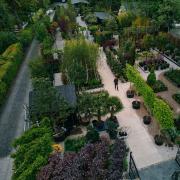


Adam McGinley, horticulture manager for Cumbria Wildlife Trust, manages the seed bank and wildflower nursery at Gosling Sike, a beautiful nature hub and wildlife garden near Carlisle
The work being done at Gosling Sike is vital in preserving and protecting Cumbria’s native plants and, since 2022, Cumbria Wildlife Trust has been part of Kew’s Millennium Seed Bank Partnership.
Located at Kew’s wild botanic garden in Wakehurst, Sussex, the Millennium Seed Bank (MSB) houses nearly 2.5 billion seeds from over 40,000 species, collected and banked through a huge collaborative effort involving 279 partners from 100 countries.

It is a vital safeguard for biodiversity and a dynamic hub for research, restoration and collaboration. With 45% of all flowering plants at risk of extinction, its role couldn’t be more important. When the MSB launched a national UK Threatened Flora project they reached out to wildlife trusts across the country, including Cumbria.
‘They basically had a target list of species they wanted to collect and asked if they could have permission to collect them, or if we would collect them for them,’ Adam McGinley explains. ‘That’s when we became part of the project – initially to collect about a dozen species and send the seed down to Kew for long-term storage.’
When the opportunity arose to set up their own seed bank, Gosling Sike was ready. Funding from Cumbria Waste Management Environment Trust allowed them to invest in proper facilities, and Kew provided consultation on everything from equipment to protocols. ‘We’re very proud to be in the Millennium Seed Bank Partnership’ Adam says. ‘Our own seed bank at Gosling Sike is the first of its kind in Cumbria and is helping to support rare and threatened plants, such as small white orchid, field gentian, petty whin and globeflower. The focus is on rare plant species that were once common in Cumbria but are now in serious decline in the county. Cumbria remains a UK stronghold for species-rich grassland, but fragmentation into small, isolated sites has resulted in a significant reduction of species.

‘I think there are only about 500 hectares of hay meadows left in Cumbria – roughly the size of Derwentwater – so these valuable habitats are very vulnerable. The work we’re doing here, and in partnership with Kew, is really important. Stats from Cumbria reflect the national picture across England over the last 75 years, which shows that we’ve lost 97% of our flower-rich meadows, 50% of our hedgerows, and 60% of flowering plants are in decline.’
Having joined Cumbria Wildlife Trust from a commercial nursery background, Adam was in a good position to help Gosling Sike become increasingly efficient and productive. ‘I think my experience was helpful in bolstering the number of plants we’re able to grow successfully here from seed.
‘It means that as well as collecting, drying, processing, and storing seeds in the seed bank for the future – which is a very scientific process – in the short term we can also germinate and grow threatened native plants in our polytunnels ready to be reintroduced.

‘The partnership with Kew and the MSB has helped give us more structure. Before I worked here, the team had been actively collecting seeds, but it was carried out in quite an informal, ad hoc way. Now we have the infrastructure, the training, and the processes in place to make more of an impact.’
There are now over 200 species in the Gosling Sike seed bank, from grassland habitats to rare orchids. A total of 40,000 plants are being grown for the Cumbria Seed Bank Project, funded by The National Lottery Heritage Fund.
As well as managing the seed bank and nursery, Adam has also become a Cumbria in Bloom judge, joined the Professional Gardeners’ Guild, and was recently selected, from applicants worldwide, to take part in the Millennium Seed Bank Partnership’s Seed Conservation Techniques course.
‘I love my job. This is my first role in conservation rather than commercial horticulture, and I find it really rewarding.

‘We’re able to work with local communities, landowners and partners to support habitat restoration efforts across the county. Growing local plants and flowers here is great for regional nature restoration as the plants are better adapted to the local soil and climate.
‘We can carefully collect seeds from naturally-growing plants, pick the most viable and give them the best start in our polytunnels – creating strong and healthy plants that can be reintroduced to local nature-depleted sites. This makes our public spaces, including nature reserves and roadside verges, much richer in biodiversity.
‘We have good relationships with local farmers who can share their knowledge of where on their land these plants used to thrive, and, in turn, we can advise on the stewardship schemes and incentives available to them for reintroducing natural flora. We also provide a management plan of how to maintain it after we’ve done the initial restoration, so it’s as easy as possible for landowners and farmers to support these projects. It benefits everyone.’

When it comes to collecting seeds, it’s a more in-depth process than the layperson might imagine. ‘If we’ve got a target list of species, we’ll do some prep about each species and its life cycle, because getting the timing right is crucial. Once the seed has started to dry out and turn darker, that’s when it’s generally ready to collect.
‘You need the permission of the landowner, and if the plant populations are on sensitive sites like those of Special Scientific Interest, you’ll need Natural England permission as well.
‘When you collect the seed, as we learned from Kew, there are important protocols in terms of how many seeds you take, so you don’t jeopardise that population’s health. We complete calculations and data sheets about the habitat, the health of the plant, the number of plants, how many are in flower, the weather, the soil type, the elevation, and so on.

‘Once we’ve cut off some of the seed heads, we bring them back to the seed bank where we have facilities to clean the seeds up – by way of sieving them and grating them – and then reducing the moisture content with drying cabinets.
‘They’re stored in our cold room at an optimal temperature and humidity level. The process of cleaning, dying and storing them properly increases how long they stay viable for.
‘Tree seeds tend to be bigger – like acorns, nuts and berries – so there’s more material to process. Tree seeds also go dormant, and each species will have its own germination strategy that we need to replicate. So it might be that the seed needs to be chilled for a certain period of time; or berries, which normally get eaten by birds or other wildlife, germinate after contacting acid in the stomach.’
As with most conservation projects, community is key. One of the most important things about the seed bank is the volunteering and community contribution.
‘Aside from myself and an apprentice, much of the work in the nursery and the seed bank is done thanks to the time and effort of our volunteers.

‘We also have a ‘men’s shed’ which provides opportunities for people to be creative, build, repair and socialise with like-minded people. They’ve helped by building raised beds and planters and things. So, it’s all kind of connected. We’ve built up a strong community.’
Volunteers help with plant propagation, seed collection and the data collection of species information and Adam is keen to ensure Gosling Sike attracts involvement from young people.
‘I think young people can be quite disconnected from nature and the outdoors sometimes, and we want to provide the opportunity for them to be involved in this work.
‘There’s a definite skills gap in people entering horticulture or botany and we want to demonstrate that there is a potential future career path for them.

‘We recognised that most of the volunteering used to be done during the week, so we opened up a weekend volunteering programme when it was more likely this 18 to 25-year-old demographic would be free. We encourage them to use the digital photography equipment and drones, to show how innovative technology can be utilised to support this important work.
‘Acquiring these valuable practical skills and being able to demonstrate their experience should be beneficial for future job interviews.
‘We spoke to places like Carlisle Youth Zone and now we have a regular group of young people coming on a Saturday to help with the seed bank.

‘In summer, we’ll be taking them to the Kew Millenium Seed Bank so they can appreciate all the work they’ve been doing in the wider context of this huge project.
‘Seeing them get inspired and wanting to do more is one of the most rewarding aspects of my job.’
It’s clear that, in partnership with the Millenium Seed Bank, Gosling Sike is doing its utmost to pass on a wealth of knowledge and practical skills to the next generation, ensuring a flourishing future for Cumbria’s plants and people.
cumbriawildlifetrust.org.uk/explore/gosling-sike