



Brian Osborne, managing director of Osborne’s, tells Nathan Fearn how a family-run Ilkeston business has built a national reputation for bespoke kitchens, bedrooms and interiors rooted in craftsmanship, quality and personal service
Osborne of Ilkeston has been in business for more than 40 years. What has been the key to the company’s continued success?
I think consistency has played a huge part in it. My father started the business more than 40 years ago, and while styles, technology and the way people use their homes have changed enormously, the principles behind the business really haven’t. We have always concentrated on producing good-quality furniture, offering a personal service and looking after our customers. We have never tried to be something we’re not. We manufacture bespoke furniture and we know what we are good at. A lot of our work comes through recommendation and repeat customers, which I think says more about a business than any advertising campaign ever could. Ultimately, longevity comes from building a reputation over many years and then working hard to protect it.

Your business specialises in bespoke kitchens, bedrooms, and studies. What does ‘bespoke’ mean in practice, and why is it important to today’s homeowners?
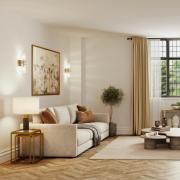
The word bespoke is used very loosely these days. For us, it means that the furniture is designed specifically for the client, the room and the way they want to live. We aren’t starting with a range of standard-sized cabinets and trying to make them fit the space. We can alter dimensions, proportions, materials, finishes and internal arrangements. If a cabinet needs to be 873mm wide because that’s what works best in the room, we can make it 873mm wide. That freedom is particularly important in older and more individual properties, where rooms are rarely perfectly square and architectural details need to be respected. It also allows us to create something that feels as though it belongs in the house rather than something that has simply been installed into it.
What are the most common design priorities you are seeing among your clients at the moment?
Storage is probably one of the biggest priorities. People want beautiful rooms, but they also want to hide away the everyday clutter of life. We’re designing more pantry cupboards, appliance cabinets, boot rooms, utilities and dedicated storage areas. Within kitchens, clients are thinking much more carefully about how they actually use the space. Where does the coffee machine go? Where do you put the toaster? There is also a move towards warmer, more natural interiors. Timber, painted furniture, natural-looking stone and softer colours are increasingly popular. People still want their homes to look impressive, but they also want them to feel comfortable and liveable.

Why has it been important for Osborne’s to stay rooted in Derbyshire?
Ilkeston is where the business began and it’s very much part of who we are. My father established the company here, and my brother Philip and I have continued it from the same area. There has never really been a reason to move simply for the sake of having a more fashionable address. Our clients come to us because of the furniture we produce, the service we provide and the reputation we’ve built. I’m also proud that furniture being installed in some exceptional homes around the country is being designed and made here in Derbyshire. There is something very satisfying about that.
What advantages does Ilkeston offer as a location for a business such as yours?
Derbyshire and the wider Midlands have a very strong tradition of manufacturing and skilled trades, and that is extremely valuable to a business like ours. Bespoke furniture still relies heavily on people who understand materials, construction and how to solve problems rather than simply following a production process.
Geographically, we’re also very well placed. We regularly work throughout Derbyshire, Nottinghamshire and the surrounding counties, but we also undertake projects much further afield. Being in the centre of England makes that surprisingly practical.

Quality and attention to detail are recurring themes in customer feedback about Osborne’s. How do you ensure those standards are maintained from the initial design consultation through to installation?
It comes down to having control over the whole process. We design the furniture, manufacture it and install it, so there is continuity from the first conversation through to the finished room. We spend a lot of time at the design stage understanding the property and how the client wants to use the space. Detailed drawings are produced and refined before anything reaches manufacture. Because our furniture is made in our own workshop, our designers and craftsmen can communicate directly. Installation is equally important. You can manufacture beautiful furniture, but if it isn’t fitted properly the end result will never be right. Having experienced people throughout that process makes an enormous difference.
How has the role of the kitchen evolved during your time in the industry, and how is that influencing the way you design spaces today?
The change has been enormous. Kitchens were once predominantly functional rooms, often separated from the main living areas. Today they are frequently the largest and most important room in the house. People cook, eat, entertain, work and socialise in them. On many projects we’re effectively designing a living space rather than simply a kitchen. That means we have to think about much more than where the sink, fridge and oven are positioned. Lighting, seating, furniture, storage, sightlines and how the kitchen connects with adjoining spaces all matter. Increasingly we’re also designing the utility, boot room, pantry, media furniture and other areas at the same time so the whole house has a sense of continuity.
Read more
-
Get to know the exhibitors at the Derbyshire Life Home & Gift Show
-
An enduring British icon is as popular now as it has ever been
As a family-run business, what values underpin the way Osborne’s operates, and how do those values shape the experience customers receive?
For me, it comes down to reputation and responsibility. When your family name is on the business, you feel personally responsible for what leaves the workshop and for the experience a customer has. We try to be straightforward with people. If we think something won’t work, we’ll say so. Equally, if there’s a problem, we’ll deal with it. My brother Philip and I grew up with the business, and many of the principles our father established are still very much part of Osborne’s today. We want customers to feel that they can pick up the phone and speak to somebody who knows them and knows their project. I think that personal relationship becomes particularly important when somebody is making a significant investment in their home.
For homeowners considering a major renovation or investment in fitted furniture, what advice would you give to help them achieve a result that will still look and function beautifully many years from now?
Don’t design purely around what is fashionable at that particular moment. A good room should have strong proportions, quality materials and a layout that works for the people living there. You can introduce current trends through colours, decoration, lighting and accessories, which are relatively easy to change later. I would also encourage people to invest in the things they touch and use every day. Good hinges, drawers, worktops, handles and properly constructed cabinetry make a difference long after the initial excitement of a new room has worn off. Most importantly, spend time getting the layout right before worrying about the finishing touches. A beautiful kitchen with a poor layout will always be a poor kitchen.

What trends, materials or design ideas do you believe will have the biggest influence on kitchens and interiors over the next decade?
I think we’re going to see interiors become warmer and more individual. We’ve moved away from the period when many kitchens were dominated by very stark finishes and almost identical layouts. Timber is becoming important again, whether that’s a complete piece of furniture or used alongside painted cabinetry. We’re also seeing more texture, warmer colours and interesting combinations of materials. Technology will continue to develop, particularly with appliances, lighting and energy efficiency, but I think the best technology will increasingly be integrated discreetly. I also think longevity will become increasingly important. A genuinely well-made kitchen or piece of fitted furniture shouldn’t need replacing every few years. Designing something that can age well, be maintained and even be updated over time makes sense both financially and environmentally. Ultimately, fashions will continue to change. Our job is to take the best ideas from those changes and create rooms that still feel right for the client and their home many years later. .










Share