


A new play, commissioned by the Northcott Theatre as part of its South West artist development programme, is promising an ‘arresting, funny and darkly magical portrait’ of the famous novelist Daphne du Maurier. Ahead of its world premiere next month, Totnes-based playwright Rosie Race reveals why she chose to create a play about this enigmatic author
Why choose this author and this story, Rosie?
From the outset we knew we wanted to tell a South West story, so I began delving into the histories of the region and its personalities in search of something that would ignite a spark and propel me into my imagination, a place I knew I would be spending a lot of time in whilst I wrote the play.
That’s when I stumbled across the mysterious world of Daphne du Maurier. To my delight she was far more than the romantic novelist I presumed her to be. In fact, the writing was so dark and subversive for her time, that several of her stories were adapted into films which became the cult horror movie classics Don’t Look Now and The Birds, both my favourites as a teenager!
The more I researched Daphne, the more intoxicated I became. Not only was her writing magnificent and prolific, but it was also deeply personal. She explored her own inner turmoil through the pages of her books, each character a peg for aspects of her own psyche and an expression of the complex inner world she was grappling with.
Then, discovering she had put an embargo on her private diaries, so they are to remain unopened for 50 years after her death, felt like striking gold!
She quickly became a permanent resident in both my head and my heart and bringing her story to stage became irresistible.
How familiar were you with her books?
I came to Daphne quite lightly at first, having only read Rebecca as a teenager and I was surprised by the wealth of her back catalogue which I was almost entirely unaware of. Apparently, to recoup the large advance Daphne received for writing it, her publishers marketed her to housewives who were their biggest audience at the time, focusing on the romantic elements of her fiction above all else. I think this legacy has lived on and is indeed why many of the people I have spoken to throughout this process also hadn’t taken the time to seek out her other work. Daphne herself claimed to have only ever written one romantic novel: Frenchman’s Creek.
It’s hard to choose a favourite. Rebecca is iconic and on re-reading it I was entirely taken by how transporting the writing is, especially the passages discovering Manderley. I also love how intimate and eerie it is to be led through the story by the unnamed narrator, I feel as though she is whispering in my ear.
I am fascinated by the darkness of her short stories, which were far more daring than she is given credit for. A number of them are quite unsettling and it’s intriguing to imagine Daphne sat at her bureau with them whirring through her mind. Currently, I am re-reading the ambiguous and provocative My Cousin Rachel which is one of two books she wrote to exorcise the obsession she had with her publisher’s wife, Ellen Doubleday.
What makes her such an interesting character?
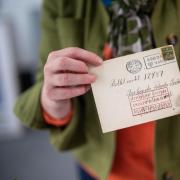
I’ve spent months immersed in and devouring her novels, tracing the contours of her life through biographies, watching old interviews and even spending days inside the University of Exeter Daphne du Maurier archive, turning over the fragile intimacy of her original letters. It’s felt like peering through a window into her world. The letters gave me particular insight, helping me hear her voice when I write and as I shape her character for the page. Through all that I feel there remains a mystery surrounding Daphne; she was unmistakably a woman of contradictions. Fiercely private and drawn to solitude, yet when the mood and company were right, she was capable of sharp and playful charm.
There’s a sense of emotional distance in the way she regarded others, pragmatic and even cool, but her own inner life? That burned with an intensity that seemed almost uncontainable. The perfect storm for creating stories, but I imagine torturous at times.
From an early age her father, the celebrated actor Gerald du Maurier, taught her that life itself was a kind of performance. For her it was normal behaviour to blur the line between truth and illusion, but also a necessity to mask her fluid identity. There is something fascinating and suffocating about that relationship, which imbued every aspect of her life and writing.
Has your appreciation of Daphne changed?
Completely! I began with a narrow idea of who she was and that’s been entirely dismantled. She isn’t simply a romantic novelist, that label feels far too reductive. She was radical for a woman in her time. Her themes explored the darker edges of human experience with an authenticity that I think makes her stories relatable and timeless. Over the course of writing this play I’ve fallen in love with her and if I’m honest it’s opened a whole new world of literature to me.
How much do you think she was affected by the South West?
I think it was absolutely essential to her; you can’t separate them. It wasn’t just a backdrop for her writing, it was her refuge and anchor. You get the sense she needed it in a real, almost physical way, as if she couldn’t breathe without it. Perhaps it’s the only place she felt she could be her true self as she hid away from the rest of the world. I imagine her wandering from room to room at Menabilly, the house which inspired Rebecca’s Manderley, where she lived for 20 years. Or with her dogs on her morning walk along the coast path, or skinny dipping in the wild Cornish sea. Her descriptions of the Cornish landscape are so evocative that whenever I stumble across one, I fall under its spell again.

How and where do you like to write?
I’m best first thing in the morning before the day has had chance to interrupt. I’ll wake up and go straight into writing. Light is important to me, so I tend to follow the sun around the house. Starting upstairs in the morning then moving downstairs as it shifts. I have a bureau, a bit like Daphne, though mine is shabbier. I bought it second-hand and painted it blue; it’s littered with Post-it notes and piles of her books.
I do like a change of scene otherwise I can go a bit stir-crazy! So, I like writing in quiet cafés, and I’ve always got the notes app on my phone for all those in between moments like waiting for the bus or standing in a queue.
What’s it like working with the Northcott’s creative director Martin Berry and the Northcott Theatre team?
Honestly, it’s been life changing. As an emerging writer, opportunities like this don’t come around often and I’m aware of how special it is. Martin and Sam Parker (artist development producer) have created something genuinely meaningful at the Northcott, they are investing in artists in a way that has long term impact to both the individual and the regional theatre ecology. The whole Northcott team are incredible, so welcoming and full of warmth, I’d like to stay forever and will certainly have a mini cry when this is over.
Martin and Sam have a real sense of belief in new work; they’ve taken risks which is no small thing right now and that’s helped build a thriving creative community around the theatre. It feels human, collaborative and full of integrity which makes all the difference.
How do you want the audience to feel when they see this play?
I want them to be absorbed, surprised moved and intrigued. I hope they will delight in the vivid characters I have drawn from Daphne’s real life. Herself at the centre, witty, secretive, intensely passionate and contradictory. Her father who was flamboyant and dangerous, and the spell-binding Gertrude Lawrence. Hitchcock and Noel Coward also make an appearance! I hope audiences will be drawn into Daphne’s intoxicating world, be surprised and moved, and maybe recognise something of themselves as we explore very human relationships.
But beyond that, I’d love their perception of Daphne to shift, as mine has. I hope they leave the theatre curious and compelled to return to her books with fresh eyes.
What do you think Daphne would think of your play?
I hope, perhaps cautiously, that she would approve. I’ve approached her story with care by piecing it together from the traces she left behind, but also knowing what I’m presenting isn’t a definitive portrait. It’s my own interpretation of Daphne, a woman who resists definition. The exciting thing is we won’t know how accurate I am until 2036 when the embargo is lifted on her private diaries and journals. She will have to keep us guessing until then. .
Daphne: the Secret Lives of Daphne du Maurier is at Exeter Northcott Theatre from July 4 to 11.
exeternorthcott.co.uk
A great storyteller by Professor Helen Taylor
Daphne du Maurier (1907-1989) is one of the most loved, commercially successful, adapted and imitated novelists of the 20th century.
Born into a distinguished family, her grandfather the Victorian novelist of Trilby, George du Maurier, and father successful London-based actor-manager Gerald du Maurier, Daphne had a long career in which she produced some of the most cherished stories of our time.
Her best-selling novel, Rebecca, has enjoyed international acclaim since its publication in 1938, followed in 1940 by Alfred Hitchcock’s iconic film version. But the success of Rebecca – described by critics and Hitchcock himself as a ‘romance’ (something du Maurier refuted) – has tended to obscure the large body of work she produced in many genres.
She published 18 novels, two plays, two family biographies, an edited collection of George du Maurier’s letters, three literary biographies (including the notorious Branwell Brontë), an autobiography, autobiographical essays, two studies of Cornwall, and many short stories and essays.
Along with Rebecca, she is known for the romantic Frenchman’s Creek, the haunting Jamaica Inn and My Cousin Rachel, and the gothic stories Don’t Look Now and The Birds (both made into much-admired films). There are numerous plays, films and radio adaptations, and many writers such as Antonia Fraser, Maggie O’Farrell, Stephen King and Justine Picardie have drawn on her work for their fiction.
She gained and has retained a popular reputation as a great storyteller and architect of haunting, psychological tales, featuring unforgettable characters such as Maxim de Winter, Joss Merlyn, Lord Rockingham and cousin Rachel.
Though critically dismissed for a long time as a romance writer, in recent years critics have celebrated her original use of gothic themes and characters, her forensic and atmospheric evocation of landscape and place, especially houses, and the accuracy with which she captures historical periods and characters.
Her biographies of the du Maurier family demonstrate her ability to research thoroughly and bring history to life. Scholars and critics are now celebrating her lesser-known masterpieces such as The Scapegoat and The House on the Strand, as well as some of her macabre and disturbing short stories.
Although born into a wealthy London family which enjoyed a rich theatrical social life, Daphne yearned for a quieter rural space in which to dream and write, and when her family bought an old boathouse in Bodinnick by Fowey, Cornwall, she found her perfect place. She lived most of her life in Cornwall, renting her dream house, Menabilly, which became the setting for some of her work and which captivated readers’ and tourists’ imaginations as ‘Daphne du Maurier country’. And although Cornwall is the county she best drew on for her writing, she also set stories and novels in France, Norway and Italy.
The University of Exeter has had a close relationship with the du Maurier family (named Browning after Daphne’s husband Sir Frederick Browning), who have generously loaned many manuscripts and papers to its Special Collections. Readers can visit these and see, for instance, the precious Rebecca Notebook which Daphne used to prove in court she had never plagiarised an American writer’s novel.
Professor Helen Taylor is the author of The Daphne du Maurier Companion and will be taking part in a post-show discussion on July 9.
Seen and felt
Laura McEwen is the set designer for Daphne. She says: ‘The guiding principle of the set design has been to balance beauty and practicality with a strong sense of landscape, reflecting how deeply Daphne’s life and work were shaped by the places around her - Menabilly, Dartmoor, the sea and beyond. This production weaves together scenic artwork, physical structure and striking projection to evoke shifting locations, periods and the emotional sweep of Rosie’s narrative. Birds wheel overhead, coastlines emerge and recede, and the presence of the natural world is not just seen but felt. In close collaboration with a world-class lighting design and digital elements, the result is a richly layered, multi-sensory experience that lingers long after the audience has left the theatre.’