


A curious brick tower in a Dorset field stands as proof of one man’s desperate need for peace and quiet. Most motorists on the B3078 south of Cranborne barely notice the lonely, slightly crooked domed structure, but this modest folly, known as the Philosopher's Tower, is more than an eccentric landowner’s ornament - it was the refuge of a great thinker who helped change English law after panic seized him in Parliament.
Built around 1700 on the edge of the St Giles estate in Wimborne St Giles, the two-storey brick tower has undeniable charm.
Its tall, white-framed windows flood the interior with light and frame the Dorset countryside, making it ideal for isolation.
A basement anchors it in the chalk, although the tower has developed a charming lean over 300 years.
Anthony Ashley Cooper, the 3rd Earl of Shaftesbury, created this retreat and led an extraordinary life from birth.
The Earl was not raised like other aristocrats of his time; instead, one of the Enlightenment’s founding figures turned his upbringing into an educational experiment.
Philosopher John Locke, the family doctor and adviser, took charge of young Anthony’s early education after arranging the second Earl’s marriage.
Shaped by Locke, the 3rd Earl became a leading thinker who wrote about human nature, virtue and morality.
But his intellect did not protect him from severe anxiety.

Despite his privileged background and exceptional education, the Earl had poor health and severe anxiety.
He built the tower because the bustle of his ancestral home and London’s vicious political world overwhelmed him.
He needed a sanctuary where he could read, write, and think without interruption.
The Philosopher's Tower offered the isolation he wanted, with open views and little noise.
Yet that anxiety led to his most memorable triumph in public life.
In 1695, before the tower was built, the Earl rose in the House of Commons to support the Treason Bill.
The bill would have given people accused of high treason the right to legal representation.
As he delivered his maiden speech to a packed chamber, the Earl froze with stage fright.
His mind went blank in front of the country’s most powerful men.

In an era where political weakness was ruthlessly exploited, he should have retreated to the benches in absolute humiliation.
Instead, he took a breath, faced his peers and turned his panic into a powerful argument.
He pointed out the obvious truth of his situation.
If an innocent MP was too frightened to speak clearly, he argued, how could a man on trial for his life face the court without a lawyer?
The unscripted argument was honest and devastating.
The argument struck a chord and is widely credited with helping the Treason Bill become law.
It is easy to see why such a man would eventually require a brick-and-mortar sanctuary to escape the pressures of public life.
Local myth has muddled the tower’s purpose and sometimes confused it with nearby Horton Tower.
Also known as Sturt's Folly, the 140-foot, seven-storey hexagonal tower was built half a century later by Humphrey Sturt, probably as an observatory or a platform for watching the hunt.
The Earl of Shaftesbury’s tower had a different purpose: it was built not to watch blood sports or the stars, but to give its owner somewhere to think.
Today, the Philosopher's Tower remains a quiet survivor and a striking piece of Dorset heritage, reminding us that private refuge can produce public achievement.
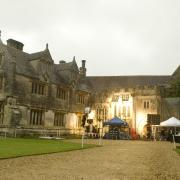
The wider estate includes Grade I-listed St Giles House, which was being restored in 2014 and had begun hosting weddings, corporate events and community activities.
















Share