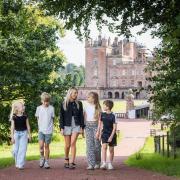



Bev and Byron Morgan turned their hobby into a rural business, taking on 34-acre Glencartholm Farm near Canonbie and turning into the home of Hebbs Alpacas – where people can meet, greet, stroke, and walk with members of their herd, as well as staying in one of the family’s glamping pods, full of alpaca fleece soft furnishings. Carol Hogarth reports
‘We try to incorporate alpacas in everything we do,” says Bev Morgan who moved from Lancashire to a former dairy farm near Canonbie with her husband Byron, three daughters, and about 50 alpacas in 2022.
Having the extra space to expand, the Morgans’ alpaca herd now totals around 80 with the animals used for breeding and stud services, showing, offering alpaca experiences to visitors, and to produce yarns and woollen accessories including socks, hats, scarves, and blankets.

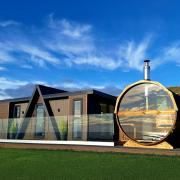
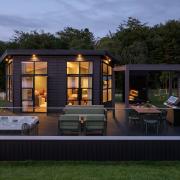
Glencartholm Farm, home of Hebbs Alpacas, also hosts visitors in four glamping pods, all with alpaca fleece throws, alpaca fleece filled duvets and views of the alpacas grazing in the neighbouring field.
Bev and Byron were both living and working in London when they met, but, owning a dog and a horse despite being in the centre of the city, IT project manager Bev was clearly destined for country life.
When their second daughter was due, the family made the break for rural Lancashire where, Bev says, “we had four-and-a half-acres, horses, dogs and children”.
With the horses not grazing enough to keep the grass down, the couple decided, in 2012, to buy four female alpacas.

“I didn’t like the idea of having sheep in the field and eating lamb for Sunday lunch, so someone suggested we think about alpacas,” Bev explains.
“We learned more about them after they came and I loved learning about their fleeces. I always liked the idea of doing something with them.”
What began as a hobby then grew and the family acquired some more land but it was away from their house and, with a view to creating a proper rural business, they moved to Glencartholm, with its 34 acres of pasture land and variety of sheds and outbuildings.
“It was a leap of faith but the children [Emily, 19, Hollie, 17, and Sian, 14] have settled in well and it’s allowed us to do so much more, building the farm up from scratch.”
Byron, a retired police officer, runs the farm and glamping business, while Bev still works full-time but the alpacas are a true family enterprise, illustrated by the name Hebbs combining the initials of Bev, Byron, and their children.
The farm has both breeds of alpacas, Huacayas and the less-common Suris, which have longer fleeces. While breeding their own animals, the Morgans have built their herd by buying some in, even importing some animals from New Zealand to get the genetic mix they wanted.
This year, between April and August, 20 crias (baby alpacas) are due to be born.
“They tend to give birth on their own and rarely need assistance,” says Bev.
“On the whole they are very independent animals so you don’t have to watch them round the clock.”

Males and females are kept separately, and can wander freely between grazing outdoors or sheltering in a shed.
In June, a shearer arrives from New Zealand, the start of a process which has become Bev’s main interest: “What I do with the fleece is a passion,” she says.
With no lanoline in it, and very fine to the touch, alpaca wool feels more like cashmere than sheep’s wool; soft and warm on the skin.
The best parts of the Hebbs fleeces are separated off to be spun into yarn at The Border Mill in Duns or in East Anglia, while the ‘seconds’ and ‘thirds’ are used for other products, including duvet and quilt fillings. Any being finely spun for woven scarves goes to a specialist mill in Ireland.
Bev has worked with Drove Weavers in Langholm to make scarves before they are sent to Galashiels to be “finished” and she would like to work more closely with Creation Mill in Langholm and other local businesses.
Bev and Gillian Elliot from Burnfoot Farm often collaborate and work together: “We both have the same aims even though we have very different farms.

“We didn’t move here because of Langholm’s textile connections but it’s great for us to be so close to people who want to talk textiles and fibre. I love working with Emma [Duncan, founder and creative director of Creation Mill] because it’s about taking people on a journey and showing them the whole process from fleece to yarn or final product.
“In the long-term I would love to see alpaca fleece become a more commercial product. It’s still very much a cottage industry.”
As well as sharing their fleeces with the public, Bev and her family love sharing their animals with visitors who can book an Alpaca Meet & Greet experience or an Alpaca Walk. Both allow the public to get up close to the animals and learn more about them.
Every cria born on the farm is halter trained and those who prove most suitable are chosen to be part of the “walking group”.
“People are often coming from towns or cities so they’re not used to being so close to animals. Every alpaca we have has its own personality and we try to pair people with the right one for the walks.

“People find it calming, they can stroke them and feed them and it often surprises our visitors how gentle they are.”
After their experience, visitors can browse Bev’s on-farm shop full of alpaca products – from scarves and gloves she has knitted herself from her own alpaca yarn and other alpaca socks, hats, and knitted products, to wooden ‘nesting material’ holders packed with alpaca wool, felted alpaca soap kits and, of course, cuddly alpaca toys.
www.hebbsalpacas.co.uk