


Nathan Fearn heads to Wirksworth to discover why – and how – the town has become one of Derbyshire’s most distinctive destinations
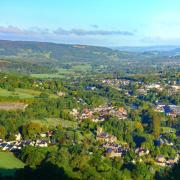
At first glance, Wirksworth has all the hallmarks of a Peak District market town. Steep streets, handsome stone cottages, independent shops and a centuries-old parish church that dominates the skyline, flanked by stunning landscapes that surround the area all play their part beautifully.
Look closer, however, and something feels different. Sculptures appear in unexpected corners. Studios occupy former workshops. Galleries sit alongside cafés and traditional pubs, many of which are frequented by locals who have drunk and socialised there for decades.
Hand-painted signs advertise exhibitions, workshops and landmarks rather than generic signs promoting chain retailers or tourist attractions.
Of course, this quiet evolution isn’t exclusive to Wirksworth; you’ll find similar examples in towns across Derbyshire.

Yet what makes Wirksworth different is that, much like Melbourne 27 miles to the south, creativity doesn’t feel like an add-on. It is woven into everyday life.
It wasn’t always this way. For much of its history, Wirksworth’s fortunes were tied to what lay beneath its feet. Long before tourism and the creative industries became part of its identity, the town was built on lead mining, with quarrying later becoming another major employer.
For centuries, these industries shaped not only the local economy but the town’s character and people, attracting skilled workers and creating a close-knit community accustomed to hard work, self-reliance and togetherness.
Today, while the quarries remain an unmistakable part of the landscape, Wirksworth has undergone what is surely one of Derbyshire’s most fascinating transformations.
Rather than reinventing itself overnight, it has gradually evolved into one of the county’s most distinctive cultural centres.
Few people have a better view of Wirksworth’s creative evolution than Kristian Day, director of Haarlem Artspace.
Read more

‘It’s certainly got that reputation and image,’ agrees Kris. ‘From the 522 applicants for our Perennial exhibition, which runs August 28 to September 20, we received around 80 applications from artists based in the area.
‘For a small town, that’s significant, but it also means you have well over 400 artists from around the country who are very aware of what’s happening in Wirksworth. Creative people are being drawn here.’
A lot of that buzz, suggests Kris, is harnessed through the deep sense of community that exists.
‘What always strikes me is how open everyone is,’ says Kris. ‘We have an exhibition coming up soon and the artists wanted a wooden structure for it. It took less than half a pint in a Wirksworth pub before I got speaking to somebody who fells trees for a living and another who’s a carpenter. There’s something special about that sense of community. It’s not always easy to come by.’
Wirksworth’s artistic identity has grown organically. Many of the original artists, makers and craftspeople who settled here were probably not drawn to the town due to a belief it would evolve to become a cultural hub.

The likelihood is they gravitated here due to its assets – beautiful buildings, dramatic landscapes and a strong sense of community forged through generations – before adding their own identities to the town.
This is, of course, one of England’s oldest lead mining settlements, with evidence of mining stretching back to Roman times, probably earlier. Lead transformed Wirksworth into one of Derbyshire’s most important communities for centuries, bringing prosperity still seen in the town’s architecture.
‘The heritage of Wirksworth doesn’t feel like it happened hundreds of years ago, it feels like it’s all around you, living and breathing,’ continues Kris. ‘There’s a magical combination of freespiritedness combined with beautiful landscapes and fascinating history that just lends itself perfectly to creativity; it’s a wonderful place to be.
‘From an arts perspective, it’s a source of constant inspiration. We work with artists who are really engaged with the history and pre-history of Wirksworth and
the region. For example, we worked with Simon Linington, who makes sculptures by grinding down different rocks and goes all over the world doing it. We took him down to the quarries by the National Stone Centre, which he was delighted with.’

If Wirksworth’s creative identity is visible all year round, each September it becomes impossible to miss in the form of Wirksworth Festival which, this year, takes place between September 11-20.
‘The festival was originally the art and architecture trail – which is still a fundamental aspect of it – but the community has made it much bigger than that,’ reveals Kris, who sits on the festival board.
‘Over the years the fringe acts – music, street performers, children’s events, local food and the likes – have become just as influential. There’s so much more that goes on now.
‘And you really get that sense of heritage-meets-creativity during the festival too. For example, Haarlem Studios is inside Haarlem Mill, a former Arkwright mill. During the festival we’re opening the studios, giving the public access to 40-plus resident artists and makers inside a historic building, which is really exciting.’
For Kris, introducing fresh ideas and perspectives to complement the existing look and feel of the town ultimately benefits all.
‘We’re always looking to grow the community around the gallery and the reason is two-fold,’ continues Kris.

‘Firstly, we do all we can to support artists in and around Wirksworth, but we also think it’s vital to bring artists from the outside in, because if you mix up the DNA of it, everybody gets better. We did Perennial for the first time last year and were originally going to have 25 artists from Wirksworth and 25 from the outside world. We got such an influx of applications that we decided to feature 100 artists!
‘What’s really interesting is that applicants this year had to state that they’d like not only to be part of the exhibition itself but also be a part of the art scene around Haarlem Artspace and Wirksworth. We’ve had 522 applicants.
‘We also run something called Germinator. At Wirksworth, we have a lot of ties with ecology, the landscape, mythology and folklore and you’ll notice a lot of our projects are named after nature in some ways. So much of the creativity that thrives here is underpinned by the town itself.’
The confidence in its creative scene extends to other areas too. Wirksworth’s food and drink scene has flourished, its community and recreational groups are strong and its local businesses well supported.

Its community assets, too, continue to thrive. Wirksworth Leisure Centre, a not-for-profit charitable leisure trust, for example, supports those within Wirksworth to live happier, healthier lives.
Together they paint the picture of a town that’s as rewarding to live in as it is to visit.
Wirksworth has evolved to become much more than the sum of its parts. A town created and supported not by marketing slogans or carefully curated branding, but by generations of people who have continually reinvented the town without losing sight of what made it special in the
first place.
For a community built on industry, that may be its greatest achievement of all, proving that creativity can become every bit as much a part of a place’s identity as the stone and minerals beneath it..






Share