


New archaelogical clues at this ancient hillfort, once the Roman ‘spaghetti junction’ of Dorset, add weight to the idea that Badbury Rings could be the true site of King Arthur’s greatest victory, says Martin Papworth
Badbury Rings near Wimborne is one of those places that has been linked to King Arthur. A few years ago I came close to understanding why.

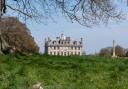
I like to approach this impressive Iron Age hillfort from Blandford. Beyond the village of Tarrant Keyneston, the road rises and enters the beech avenue marking the beginning of the Kingston Lacy Estate. The trees are amazing any time of year, with the light flickering through leaves and branches until a sign takes you left into the National Trust car park.
Until 2004, this place was a mystery. For hundreds of years there have been rumours of occasional discoveries of weapons, pots or coins on and around the site, but without detailed archaeological investigation, the chronological narrative had been largely guess work.

Badbury isn’t like other Dorset hillforts like Hod, Pilsdon or Hambledon. No steep climb is required to reach the domed hilltop surrounded by its three concentric ramparts and ditches. Once you are on the top of the defences there is the sudden surprise of your vantage point. It is the highest place for miles around.
The Romans knew this and used Badbury as a sighting point to create a route centre here. Whenever I give a guided walk I say that it is the Roman ‘spaghetti junction’ of Dorset. From here roads can be traced north-east to Old Sarum (Salisbury) and then on to London; south-east to the coast at Hamworthy near Poole; south-west to the local Roman capital at Dorchester; west to Ilchester or north-west to Bath.

A strategic location then, and by the later fifth century Britain lay beyond the Roman Empire. At this time Badbury occupied a borderline between the encroaching Germanic peoples and the established Romanised British.
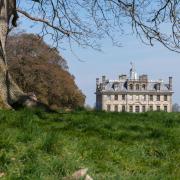
On September 11 1890, Badbury was the venue for the meeting of the Dorset Natural History and Antiquarian field club. The assembly alighted from their carriages and walked up to the hillfort. Over 120 people seated themselves on top of the The Rings, to hear the reading of a paper by Dr Wake Smart of Cranborne. The key question was debated. Did the battle of Mount Badon take place here, where Arthur for a time rolled back the tide of Saxon conquest? No conclusion was arrived at and the party was conveyed to Kingston Lacy House where Mr Walter Bankes received them for a tour of his home.
In the scant documentation that survives to create a history of the fifth to sixth century, there are references to a battle at a place described as Mons Badonicus or Mount Badon. At this place, the Britons were the victors and prevented the invading barbarian peoples from across the sea from advancing further into the West Country. A shadowy semi-mythical leader known as Arthur is credited as the war leader who enabled the victory. From just a few contemporary references, the whole romantic legend of King Arthur and his knights of the round table developed during the later medieval period.

This battle was so significant that the Britons held the line for upwards of 50 years. Some say that Mount Badon was near Bath, others suggest it was Liddington Camp or Badbury near Swindon but Dorset archaeologists have long believed that Badbury Rings is the best candidate.
I was researching the Iron Age people of Dorset and because Badbury was the central place for my study, I requested permission to carry out the first archaeological excavation there. Historic England granted scheduled monument consent to dig a six metre square trench against the inner edge of the outer rampart near the hillfort’s western entrance. Here, there was a hollowed area which I believed marked the position of an Iron Age round house occupied over 2,000 years ago. This position might contain deeper deposits of soil where the rampart had slumped, protecting the buried archaeology.
Members of the East Dorset Antiquarian Society of Wimborne, whose symbol is Badbury Rings, kindly agreed to form the archaeological team for the excavation.
Our first find was a plastic comb. A little deeper and we unearthed a bullet cartridge, the Home Guard had practised here during the Second World War. There wasn’t a lot else for a while, except the odd worn bit of black pottery and a few oyster shells scattered along the slope line below the rampart. Here there were chunks of stone as though a wall had been dismantled leaving a few bits behind. Clearly the inner defensive embankment of Badbury Rings had once been much higher and steeper but weathering and erosion over the centuries had worn it down to its present profile.
We reached the edge of a chalk repair mixed with baked clay which preserved the indentations of woven timber branches. Perhaps fragments of a wattle and daub building which had been demolished and pushed into the rampart. At this point we were expecting Iron Age pottery but instead we encountered a well-preserved coin of Constantine the Great (AD 306-337).

Time was running out as we cleared off a layer of soil to reveal a compacted chalk floor. The items discarded on this floor caused us to wonder. The fragments of pottery we found were all, it seemed, late Roman in date and there were items of metalwork including a decorated bronze ring and a weight used for measuring quantities. Mixed with these scattered items were patches of charcoal which we collected for further analysis.
We had run out of time and the only Iron Age material we’d found were stray fragments of worn pottery out of context. It was generally agreed that the Roman conquest of Dorset in AD 44 had caused the abandonment of Badbury Rings so why was all this late Roman material lying on top of a chalk floor?
The answer to this question came a few months later when the radiocarbon dates were sent to us from the laboratory. We had collected three charcoal samples from the chalk floor but the first proved to date to the Iron Age, 500 years earlier than the late Roman bits and pieces we had found with it. Perhaps the sample had come from an ancient piece of timber that had been used as fuel and burnt on the site. However, the other two dates were very exciting as they both dated this reoccupation of Badbury to the period AD 480-550 demonstrating that the hillfort was reoccupied at the time of the British victory at Mount Badon.
Perhaps the reason that archaeologists find it so hard to identify this ‘Dark Age’ of the fifth to seventh centuries is because the finds look Roman. Anyway, good evidence to say that Badbury might be the site of Mount Badon and if you look carefully at the outer rampart it seems to overlap the edge of the Dorchester Roman road, perhaps built in the fifth century as an addition to the Iron Age defences the ‘Dark Age’ builders inherited. The Dorset antiquarians of the 1890 visit would have loved this new information but the technology to achieve it was still a far future thing..

Further Reading
Dark, K., 2000, Britain and the End of the Roman Empire, Tempus
Papworth, M., Excavation and Survey at Badbury Rings, Dorset, Proceedings of the Dorset Natural History and Archaeological Society 140, 129-171 read online at dorsetmuseum.org/learning/publications/proceedings


















Share