


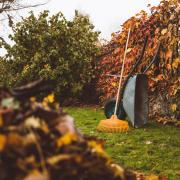
September is the ideal month to scarify your lawn, removing thatch before winter arrives. It improves air circulation, encourages stronger grass growth and leaves less room for moss to take hold. I confess I now let an electric scarifier do the hard work for me.
Hardy annuals sown now will establish before winter and reward you with flowers much earlier next year. Cerinthe, cornflowers, scabious and Ammi are all excellent choices, filling those awkward early-season gaps with colour before summer reaches its peak.
Keep an eye on Michaelmas daisies during dry spells, as powdery mildew often appears when plants become stressed. Water thoroughly at the roots rather than overhead, and consider growing reliable, resistant varieties such as Aster × frikartii ‘Mönch’, which performs beautifully year after year.
Read more
-
How do I get rid of bindweed and ground elder without using chemicals?
-
How can I make my garden a haven for pollinators throughout the year?
PLANT OF THE MONTH

Sternbergia lutea
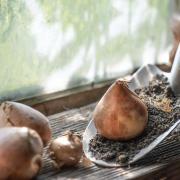
Known as the autumn daffodil, Sternbergia lutea produces brilliant golden flowers just when many borders are beginning to fade. Although it resembles a crocus, it is quite different and comes originally from the Mediterranean and Central Asia. I first spotted it growing among rocky outcrops on a Greek island and have admired it ever since. Plant the bulbs around 15cm deep in well-drained soil and leave them alone. One of autumn’s finest bulbs, and still far too little known.
Perfectly hardy, drought tolerant and only about 15cm tall, it gradually forms handsome clumps.

Q: Which Dorset gardens should I visit this September?
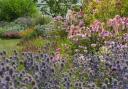
A: For gardeners, September is one of the best months to explore. The fierce heat has usually eased, the schools are back, and many gardens are quieter than they have been all summer. Better still, many borders are still brimming with colour, thanks to later-flowering perennials and many wonderful new varieties.
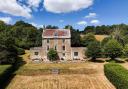
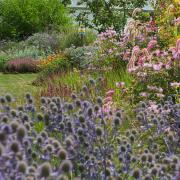
People often ask me which Dorset gardens I would recommend. It’s an impossible question to answer because we are spoiled for choice. Alongside favourites such as Athelhampton House, Minterne Gardens, Sherborne Castle (pictured), Mapperton and Compton Acres, my own number one remains Abbotsbury Subtropical Gardens. Its remarkable collection of rare plants beneath a magnificent tree canopy, with glimpses towards Chesil Beach, is a delight in every season.
Other gardens I return to time and again include Kingcombe Nature Reserve near Toller Porcorum, Careys Secret Garden and East Holme near Wareham, and
Knoll Gardens near Wimborne, where the planting with ornamental grasses is inspirational.
Don’t overlook the National Garden Scheme or Dorset’s Open Gardens events either. Some of the greatest pleasures can be found behind the gates of private gardens, where generous owners open them in aid of charity. You’ll always come home with fresh ideas – and perhaps a few plants to add to your own garden.
Got a gardening quandary? Drop Ian an email at iantribe@gmail.com
Ian Tribe is the author of The Plant Kingdom (Hamlyn). He has taught widely, founded the Wisley Series at RHS Garden Wisley, and currently runs monthly gardening workshops in Ryme Intrinseca, as well as writing and broadcasting, with an occasional gardening slot on Radio Solent














Share