
What does it take to have a blanket made from wool from your own flock of sheep? That’s what Gillian Elliot set out to learn five years ago, immersing herself in the process and succeeding in creating a product that not only tells the story of her family’s 3,000-acre hill farm, Burnfoot, in the Ewes Valley, but also showcases the talented textile teams in Langholm, playing a key role in the town’s first Wool, Woven & Wild Festival. Carol Hogarth reports
It was while working as a wool handler during shearing on the family farm five years ago that Gillian Elliot decided to make her husband Andrew’s dream come true – to have a blanket made from his own flock’s wool.
A keen crocheter, with a passion for sustainability, she recognised the chance to create a durable, natural product that told the story of their 3,000-acre hill farm.

Gillian immersed herself in the wool process – skirting, scouring, carding and spinning – before looking for a mill to bring about the entire transformation from fleece to yarn.
“We don’t get much for our wool and I wanted to see if we could make something from it, try to make it viable, starting with lambswool blankets. I thought if they didn’t sell, at least we’d have tried. It took me nearly two years to get my head around it all and work out what the process needed.”
Gillian found Paul and Mairhi Crooks, at the family-run Halifax Spinning Mill, and they agreed to work with the initially small amount of wool from Burnfoot, processing the fleeces and spinning the wool into yarn.
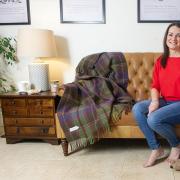
It then came back to Langholm where it was dyed by FTS Dyers, based in the town, and woven into a blanket by another Langholm business, Drove Weavers, before finishing was done by Schofields in Galashiels.

“We started with just 20 blankets and within three months local people had bought them all. We started selling some yarn too, for knitting and crocheting, and within six months that had all gone, too.”
The next time, Gillian had 40 blankets made, then 90. “It’s amazing how the local people have supported us. One of the reasons we decided to go with blankets was we knew we could involve local businesses in the process. Everyone jumped at the chance to help us.”
The Elliots began by promoting their products on social media, then through their website and then by attending wool festivals.
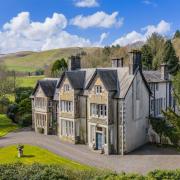
The family has farmed Burnfoot since 1921 and it is now run by Andrew, Gillian and Andrew’s mother Anne. After school, Andrew went to New Zealand to work as a shearer and it was that experience that influenced his decision to cross Burnfoot’s traditional South Country Cheviots with New Zealand Romney sheep.

“In the past there would have been seven shepherds working on this farm, but now there is only Andrew, with help from Anne and I,” says Gillian. “That means it’s important to have sheep that are easy to work with and easy lambing, which the New Zealand Romneys are.
“Andrew also knew the wool would be better and, from the day he introduced the New Zealand genetics, he knew he wanted to do something with the wool.”
Gillian says she feels like she’s educating people about the work that goes into taking wool from the sheep to a finished product and how special that product then is.
“I talk about the care that’s taken to make these blankets and the passion that goes into them. It’s about using everything around us in nature, like we used to do before everything became man made.
“People think British wool is itchy but that’s because it is from sheep that are grown quickly for meat production. Grown slower, you can get a nice, soft wool.”

While the blankets are made with 100 percent Burnfoot wool, some of the yarns are a mixture using wool from neighbours’ Bluefaced Leicester and Shetland sheep.
“At first the yarn just came from wool left over from the blanket making, but we were quite blown away by how nice it was,” says Gillian. “The yarn side of it has really taken off.”
Although producing their own wool products has taken financial investment, hard work and time, Gillian says it is now starting to pay for itself and she is being approached by other sheep farmers interested in doing similar things. “I’m more than happy to talk to people about what we are doing and how it works,” she says. “Even if we don’t make much money from it, if it just continues to pay for itself, we’re so happy to be adding value to our own natural product.”
Gillian will be busy showcasing Burnfoot Wool over the next few months at Perth Wool Producers Showcase, the Woolly Good Gathering in Edinburgh, the Tangled fibre festival in Galashiels and the Cumbrian Wool Gathering.

She says the Wool, Woven & Wild Festival was a huge hit: “The feedback we have had has been unbelievable. It was great to show off all the talented people we have in Langholm and Dumfries & Galloway. It was really good for bringing people into the town and benefitting the other businesses here, too.”
burnfootwool.com