


Expansive coastal scenes, dramatic fells, meres and tarns steeped in legend and picture-perfect towns packed with historic charm, Cumbria has it all
The Lake District National Park is a UNESCO World Heritage Site and loved by tourists worldwide. It is a must-visit destination for walkers, whether for a gentle stroll around a picturesque country village or a serious climb up Scafell Pike, England’s highest mountain.
Outside of the National Park, Cumbria continues to wow visitors thanks to the bucolic scenery of sweeping fells and elegant seaside towns and villages.

It’s easy to see why Cumbria has long-inspired poets, writers and artists. William Wordsworth and his sister Dorothy, Beatrix Potter, Samuel Taylor Coleridge and Arthur Ransome are a few.
Seeing all that Cumbria has to offer couldn’t be easier thanks to the recently launched Cumbria Travel Pass which gives unlimited travel on selected trains, buses and lake cruises. Choose a one-day or three-day pass and discover charming towns and villages, cosy pubs and delightful country walks. Here’s a look at some of the Cumbria towns just waiting to welcome you.

Windermere
Windermere is what many visitors first think of when it comes to The Lake District. Home to England’s deepest lake, it offers an idyllic view with steamers, kayakers, paddleboarders and swimmers all making the water their home.
The lake’s impressive boating heritage is celebrated at Windermere Jetty Museum, located on its shore. Visitors can marvel at the craftsmanship which has gone into creating the vessels that have graced the waters over the years. Get up close to see motorboats, steam launches, sailing yachts and speed boats before enjoying a bite to eat in the museum’s cafe which has views across the water.
Cruises run throughout the day; a perfect way to see the panoramic Lakeland views from the water, as well as getting a close look at the numerous islands dotted about in the lake.
Younger visitors will love a trip to The World of Beatrix Potter where the stories of Peter Rabbit and friends are brought to life. This year marks 160 years since Beatrix Potter was born, and her books, which vividly describe the local landscape, remain as popular as ever.
Brockhole, while currently undergoing renovations, still has its grounds open and daredevils can take to the skies with Zip World on the 250m zip line, and enjoy various tree-top adventures.
There are plenty of cafes, pubs and restaurants to find a hearty meal, light bite or refreshing drink. Ice cream lovers can indulge in a creamy gelato at Windermere Ice Cream Shop while diners looking for a laid-back bistro vibe can book a table at Francine’s.
Shoppers can browse in the many traditional shops including Lakeland, which is a brand now known worldwide. It began life in Windermere where its flagship store remains a draw for shoppers looking to bag a kitchen gadget. From its humble start 60 years ago in a family garage in Windermere, it now sells more than 4,000 kitchen and home products!
Walkers are spoiled for choice when it comes to routes in and around Windermere. There are walks for all abilities including a number of Miles Without Stiles routes which are accessible for wheelchairs, pushchairs and people with limited mobility. A popular walk beside the water starts at the Ferry House on the Lake’s western shore and ends at Wray Castle, which is operated by The National Trust. The parkland has waymarked trails and the Gothic Revival Boathouse is one of the largest boathouses in The Lake District. A round-trip hill walk up Orrest Head will see walkers rewarded with panoramic views taking in not only Windermere but also Scafell Pike and the Langdale Pikes.

Kendal
The historic market town of Kendal sits just outside the National Park and it has become synonymous with the mint cake that shares its name and which has fuelled many a walker on a long Lakeland trek.
The wool trade is a huge part of the town’s heritage and its motto, ‘Pannus mihi panis’ meaning ‘Cloth is my bread’ echoes that. Wool attracted many people to live and work in Kendal and ‘Kendal Green’ was a durable woollen cloth, dyed with locally grown woad and weld and widely used for working-class clothing.
Kendal Castle, built around 1200, was the seat of power for the great and the good for more than 200 years, most notably the Parr family including Katherine Parr, Henry VIII’s sixth wife. Visitors can soak up the history with a stroll around the ruins. There is an audio trail for visitors to learn all about the Castle’s rich past.
Culture plays a huge part in Kendal and it is a festival town with a year-round calendar of events. Live music, county shows, torchlight carnivals, crafts and comedy – there really is something for everyone. The Brewery Arts Centre is at the heart of the town’s cultural offerings and a cool place to catch a film or watch a band.
Abbot Hall, a Grade I listed Georgian building, houses an eclectic art collection, including watercolours by JMW Turner and John Ruskin as well as contemporary pieces by Paula Rego and Bridget Riley.
Off the high street is where Kendal’s heritage can be truly found. The many 18th Century yards were filled with cottages and workshops from where the wool trade flourished. Collin Croft is packed with features, having housed Collin Croft Brewery, a Malt Shovel Inn, timber yard, printing works as well as stables and cottages. Each yard has a plaque filled with fascinating facts.
Now, shops, cafes, artists and makers can be found in the Yards which offer a mix of independent traders and high street names.
The outdoor market is held each Wednesday and Saturday while Kendal Farmers’ Market is held on the second and last Friday of every month. Here, local produce takes centre stage with stalls offering artisan breads, cheeses, fruit and vegetables and handcrafted goodies.
Coffee aficionados are in for a treat in Kendal where the cafe culture is strong. Farrers Tea and Coffee House has been serving tea and coffee to the people of Kendal and beyond since 1819, making it one of the longest established coffee roasters in the country.
Traditional cosy pubs with open fires and comfy seats sit alongside cool wine bars in the town so whatever your tipple, there’s a drink with your name on it.

Grange-over-Sands
A stroll along the mile-long promenade in Grange-over-Sands gives year-round holiday vibes with its palm trees and the town’s balmier micro climate thanks to the Gulf Stream.
Famous as a fashionable seaside resort in the 19th century, the town maintains its Edwardian elegance and attracts day trippers and holiday makers looking for a seaside getaway. The pedestrianised promenade is perfect for family walks and birdwatchers who can watch as the seabirds swoop across the water.
Visitors arriving by train are in for a real treat. The station, opened in 1857, is a gem and has been named the UK’s best small railway station as well as Heritage Station of the Year. A great reason to ditch the car and arrive in style with coastal views to keep you company.
Away from the promenade, visitors can stroll through the ornamental gardens with semi-tropical plants and trees surrounding the pond which is home to ducks and geese from around the world.
Read more
-
A quaint Cumbria market town with history to discover around every corner
-
This pretty Cumbria town has all the ingredients for a grand day out
If you take a walk up Hampsfell, you will find the Hospice, a historic stone shelter and lookout tower, built in 1846 by the Vicar of Cartmel, as a resting place for travellers. Take a breath and admire the views across the town and Morecambe Bay.
Anyone wanting to pick up something a little bit different should head to Grange Emporium. This treasure trove of a shop is a must for vintage lovers, with everything from dresses and vinyl to crockery and jewellery.
Eateries include At Home Cafe and Bistro, where diners can tuck into seasonal fare cooked using locally-sourced ingredients. Pop into Brew? for a coffee with a view across the bay and estuary, or grab a sweet treat from The Hazelmere Bakery to eat on the go.
PromArt, an open-air arts and crafts fair, makes the Promenade its home each month. Local artists and makers showcase their art, photographs and crafts, and visitors can also enjoy live music, performing arts and craft demonstrations.
A trip to Grange-over-Sands will not disappoint. Its timeless elegance is evident in the architecture and open spaces. A truly Cumbrian coastal delight.

Appleby-in-Westmorland
Nestled in a loop of the River Eden, Appleby is an ancient market town that has kept its heart and charm. Once the county town of Westmorland, it is a place that still packs a punch when it comes to heritage. Take a stroll along Boroughgate, the town’s main street and you will see its past everywhere.
Moot Hall, which now houses Appleby Tourist Information Centre and where the Council holds its meetings, is at the heart of the town. Now a Grade II* listed building, it is where Appleby’s first Market Charter was signed, and it dates back to 1596.
Pop in to the visitor centre and see a piece of the town’s past. The Bull Ring, in the town centre on Boroughgate, has a somewhat grisly tale to tell. It is where dogs were used to bait bulls before they were slaughtered. Bullfighting stopped in 1812 after one spirited bull broke free and stampeded through the streets of Appleby. The Bull Ring is now on display in the Information Centre.
The town’s market heritage can be seen in the High and Low Crosses at either end of Boroughgate which mark the original boundaries of the Town Market. High Cross was the cheese market while the low cross was where butter was sold.
A trip to Appleby Castle reveals one of the few intact Norman Keeps in the country, and at over 900 years old, it is the oldest part of Appleby Castle. It has been held by the Kings of Scotland and England and one of its most famous residents was Lady Anne Clifford – a noblewoman and restorer of castles.
Appleby Railway Station, opened in 1876, is on the famous Settle-Carlisle line and, like many stations along the line, is not situated in the town centre. Just a heads-up for anyone arriving by train – there is an uphill walk to Appleby centre.
Being at the heart of the Eden Valley, Appleby is a great base for walking and cycling holidays. Visitors can take advantage of some renowned independent shops and eateries including award-winning butchers, brewery, bakery and the wonderful Appleby Creamery which makes a selection of cheeses including Eden Sunset.
Many visitors make an annual trip to Appleby for the Horse Fair held every June where the tradition of washing horses in the river is quite a sight to see.
The saying ‘good things come in small packages’ could certainly apply to Appleby. It is worth a trip any time of the year.

Maryport
Once a fishing port, Maryport is a town with a tale or two to tell. It is also part of the Hadrian’s Wall UNESCO World Heritage site ‘Frontiers of the Roman Empire’.
Maritime and Roman heritage make the coastal town a hub of historical facts and stories. At Senhouse Roman Museum, situated next to the site of a Roman fort, visitors can see a huge collection of Roman artefacts, many of which were unearthed at the nearby fort and settlement. Exhibits include military altars, sculptures and objects which tell the story of Roman life.
The town’s maritime past can be explored at a pop-up museum where the collection consists of objects, photographs and paintings relating to the maritime, industrial and social history of Maryport.
Maryport has its name thanks to local landowner, Humphrey Senhouse. He first developed a port and an Act of Parliament in 1749 passed permission to create a town and he named it after his wife Mary.
It is also the birthplace of Thomas Henry Ismay, founder of White Star Line which built the ill-fated Titanic.
The sea theme continues at The Lake District Coast Aquarium where you can get up close and personal to thousands of marine life. Find out about the life of sharks, tropical marine reefs and freshwater fish and marvel at the Shipwreck display. There, species which live in the ocean depths can be found including the octopus and dazzling sapphire blue European lobster.
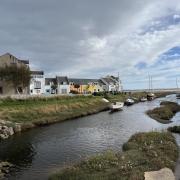
Georgian and Victorian architecture is abundant in Maryport making it a visual treat for visitors. Fleming Square, once a marketplace, has kept its 18th century character – its cobbled central square is surrounded by Georgian and Victorian buildings. A walk to the harbour and marina makes for a great vantage point to take in views across the Solway Firth.
Maryport has well and truly put itself on the cultural map, hosting the annual Taste Cumbria Maryport Festival which celebrates local food and drink with market stalls, demonstrations and entertainment. Maryport Live is the live music festival which is held across multiple venues, creating a fabulous community spirit.
Cafes, pubs and restaurants will satisfy foodies including the Marina View Cafe where, if the weather gets the memo, an al fresco lunch will hit the spot. Near the harbour is the Captain Nelson pub, winner of the 2025 Cumbria Life ‘Best Pub or Bar’. Relax with a glass of wine and listen to some great live music.
Put Maryport on your to-visit list. Its past is fascinating and its present is just as captivating.







Share