


Explore one of Cornwall’s most ancient landscapes, and the site of a grisly murder
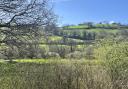
While no one could possibly doubt the appeal of Cornwall’s spectacular coastline, it would be remiss of us to neglect its inland beauty, which is why this walk shines a spotlight on one of its most dramatic features.
Bodmin Moor is part of the Cornwall National Landscape (formerly the Area of Outstanding Natural Beauty or AONB) and the Cornish Mining World Heritage Site and is also an International Dark Sky Landscape celebrated for its lack of light pollution.
Its granite has been exported around the world, and can be found in several London bridges, Marks & Spencer in Brussels and even Calcutta Docks. Closer to home, you can find it in the Truro branch of Waitrose – or here, in its rawest, most impressive form.

This area feels older than time, with evidence of Neolithic, Iron Age and Bronze Age settlements here. Bodmin Moor has been farmed as pasture for around 4,000 years, and still is – sheep and ponies are likely to join you on your ramble.
More recent history includes the monument to poor Charlotte Dymond, whose body was found on Roughtor on April 14, 1844. A maid at a nearby farmhouse, Charlotte was said to have been murdered by her jealous lover, servant Matthew Weekes, who was hanged before a crowd of thousands in August that year. The monument was paid for by public subscription, and originally stood at the exact site of the dreadful deed. However, many protested Weekes’ innocence, leading to an enduring and grim fascination with the case – until 2019, a somewhat tired reconstruction of the courtroom at the time of Weekes’ trial could be viewed in Bodmin’s Shire Hall. The monument is largely fenced off by barbed wire, but not inaccessible.

In the opposite direction, you get a fantastic view of Brown Willy, a name thought to derive from the Kernewek Bronn Wennili meaning "hill of swallows". This is far more poetic than its English moniker, and many Cornish folk would love for Brown Willy to reclaim its original title in much the same way that Snowdon is once again Yr Wyddfa.
On New Year’s Day, look out for some incredibly fit and hardy folk taking part in the annual Brown Willy Run, which starts from Jamaica Inn on the A30 and scales Cornwall’s giddiest heights. It’s quite the way to start the year.

1. Take a rough track from the car park, pass through a gate and cross a stone bridge over the stream. Turn immediately right and head towards the Charlotte Dymond monument (warning – this stretch is especially boggy).
2. From the monument, head diagonally uphill, through the hut circles, towards the right-hand slope of Roughtor.
3. Climb through the rocks towards the summit and the memorial plaque.
4. Follow the ridge over Little Roughtor and towards Showery Tor, until you are almost in line with the car park.
5. Turn left and follow the broad path down to the stone bridge and car park.
COMPASS POINTS
Distance: 3 miles
Time: 2 hours
Map: OS Explorer 109 Bodmin Moor
Start and finish: Roughtor car park (Forestry England, no charge)
Nearest WC: Camelford





















Share